







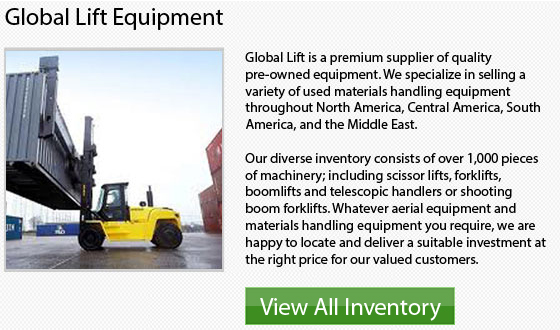
The forklift has become a crucial piece of machine that can raise and move products and heavy materials with both efficiency and speed. The way a business uses this machine could considerably affect its productivity.
A popular storage technique is Free Stacking Pallets. This is a way to use your lift truck which is easy and economical. Free Stacking Pallets is placing one pallet over another to make a stack of products. This is a stable storage system and is recommended when handling huge amounts of similar goods, or numerous pallets of the same height and dimensions. The disadvantage of this technique is that it only allows access to the objects put last, so it does not allow a First In First Out system.
Pallet Racking is a technique which involves the stable storage of different sized pallets. Any pallet can be accessed at any time, that allows a First In First Out or Last In First Out method. It permits the rack to change shape and grow depending upon daily needs. This method requires aisles which are sufficiently wide to allow a lift truck to maneuver easily and to freely access the racks. The downside is that this technique means fewer pallets can be handled within the setting. This might not matter if there is sufficient space available.
Narrow aisle racking is like pallet racking in that it enables for a First In First Out or Last In First Out technique. The difference in the method is how the special narrow forklift is used. This means that smaller areas are necessary between the aisles of pallets than in the Pallet Racking technique. The benefit is that more product can be stored in the same area. The downside is that you would have to transition to a new truck if you already own a standard lift truck. The cost of acquiring special machines may be a deterrent to adopting this specific system of storage.
Using your forklift to its fullest capability is essential as it pays to analyze your storage costs and retrieval costs of pallets. Then you can find out whether there are more effective means to utilize your lift truck to speed up the process or to increase the usable space of your units. Greater efficiency means greater productivity.